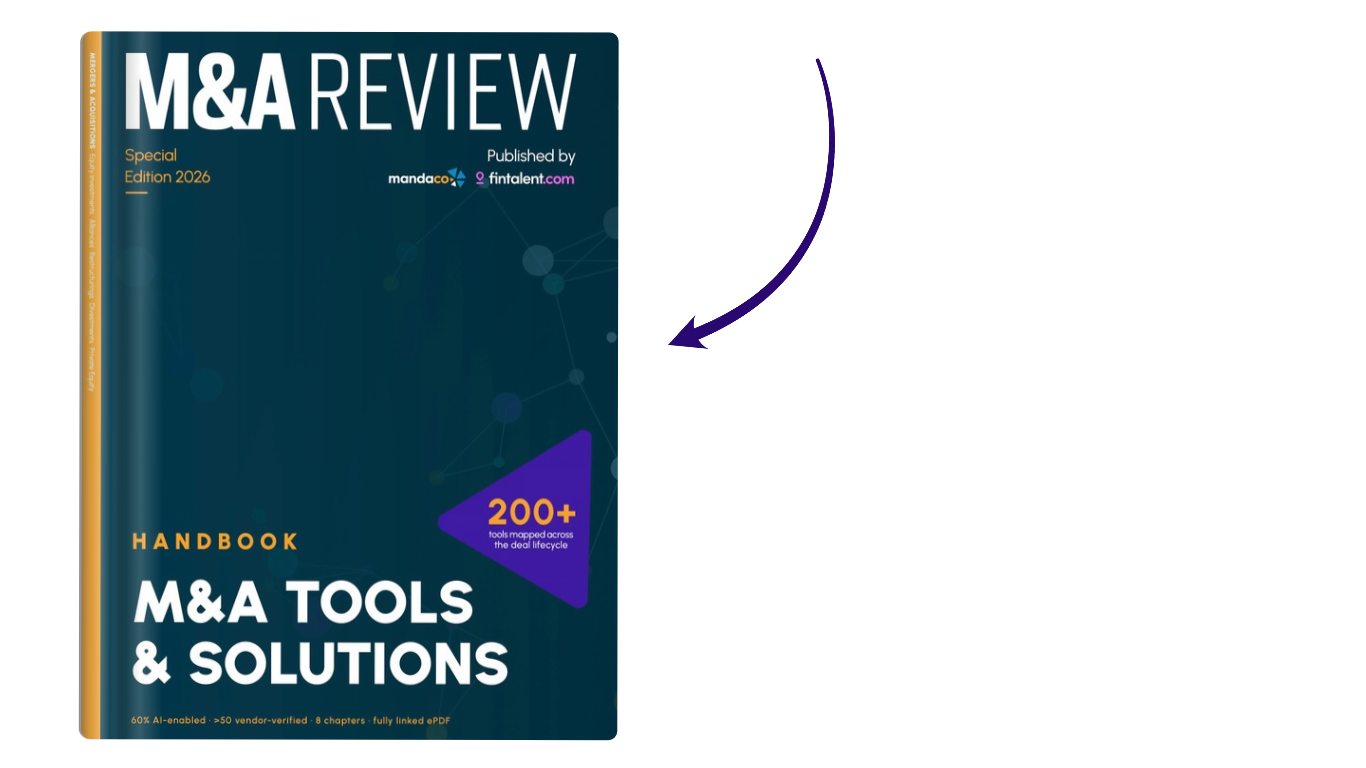
Every deal team needs M&A tools and solutions it can rely on, whether it’s choosing a data room, a sourcing platform or a diligence tool. With new options arriving every year, knowing what exists and what is mature has become a job in itself.
The M&A Tools & Solutions Handbook 2026, published with mandaco as a special edition of M&A REVIEW, maps 200+ of these tools across the deal lifecycle, from the first market scan to integration. Each tool is profiled in the same format, so you can see what it does, who it’s built for and how it compares to others in its category without going through a dozen vendor websites.
What the M&A Tools & Solutions Handbook covers
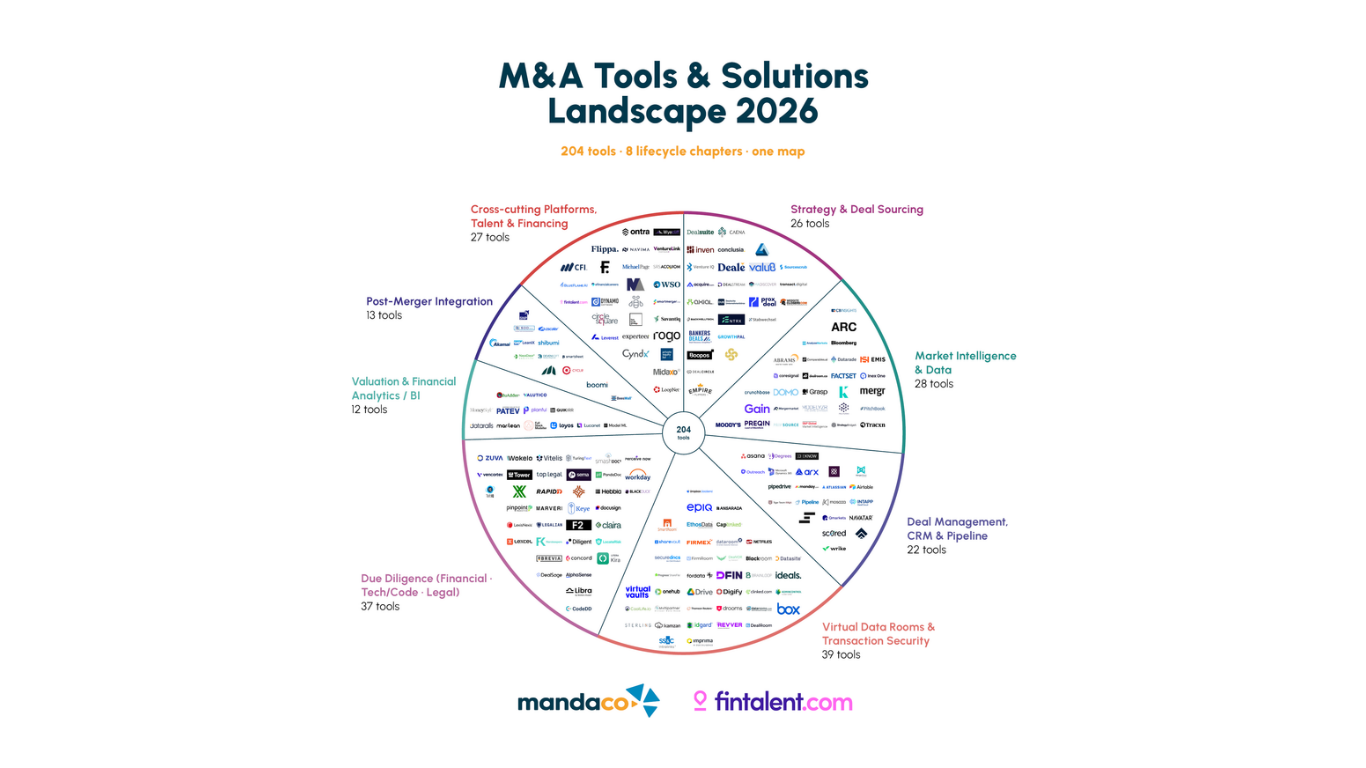
The handbook has eight chapters that follow a deal from sourcing to integration. Each tool gets its own page covering features, pricing, target users, integrations and any AI capabilities. Below are a few of the questions it helps answer.
Which tools do M&A teams use to find targets?
Chapter 1 covers 26 sourcing platforms and deal marketplaces, and Chapter 2 covers another 28 market intelligence and data providers. Sourcing is one of the fastest-moving categories. Several platforms now read millions of private-company signals to return ranked longlists, and some sell signals that a company may come to market months before a formal process starts.
How do virtual data rooms compare?
Data rooms are the largest chapter in the handbook, with 39 providers. Secure storage has been standard for years, so the profiles focus on what sits on top of it. That includes Q&A over documents, automatic redaction, findings pulled out before anyone opens a folder, and pricing models that range from per-page to data volume.
How is AI changing due diligence?
The 37 due diligence tools cover financial, legal, tech and code review. Contract review, code audits and cyber scans that used to take weeks can now return structured findings in hours. Deciding which of those findings matter for the deal, and how they affect the price, is still down to the deal team.
Which tools support post-merger integration?
Integration decides how much of a deal’s value holds, yet fewer tools are tagged to it than to any other stage. Chapter 7 profiles 13 tools, from synergy tracking and IT integration to analytics that measure how employees respond to a deal.
What does “AI-enabled” mean for an M&A tool?
Close to 60% of the M&A tools & solutions in the handbook claim AI in their core product. The term can mean anything from a search index to an agent that runs a multi-step workflow. Each profile has a separate block describing what the vendor says its AI does, so you can compare tools on something more specific than the label.
How was the handbook put together
Inclusion in the M&A Tools & Solutions Handbook was editorial and free of charge, and no tool is ranked or scored. Every vendor was invited to review its own entry before print. The report also includes guest views from Prof. Dr. Karl Popp of the BMA Digitalisation Working Group and Kison Patel, founder of M&A Science.
Keep it close for the next time your team chooses a tool. Starting with the whole category in front of you makes for a shorter shortlist and better questions in the first demo.
You can also browse the same tools in our online M&A tools database, where you can filter by category, AI capabilities and country and open a detailed page for each tool.
Get your copy of the “M&A Tools & Solutions Handbook 2026”: